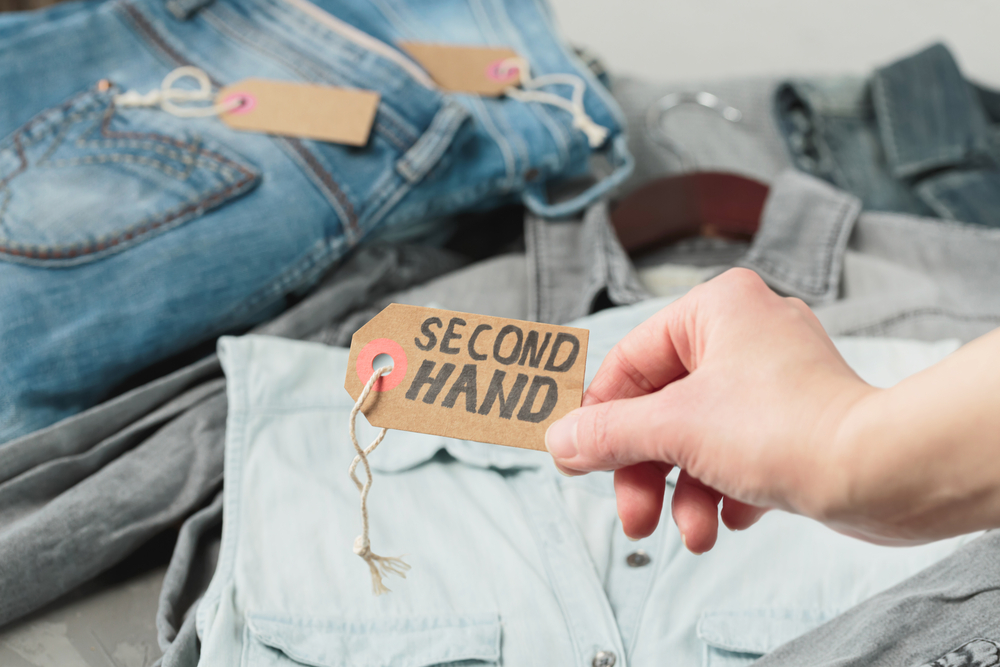
The circular economy of textiles: the wholesaler’s role
“Circular fashion” has become a conference buzzword. Behind the slogan, however, there is very concrete work: warehouses, bales and containers — the second-hand supply chain. It is worth explaining what a circular economy in textiles really means, and why a second-hand wholesaler is an essential part of it rather than a detail.
The problem circularity tries to solve
The dominant model in clothing is linear: produce, consume, discard. The numbers behind that model are stark, even on the most conservative estimates. Every year more than 100 billion garments reach the market and around 92 million tonnes of textiles become waste (Ellen MacArthur Foundation, UNEP). To put it in perspective, the same foundation estimates that the equivalent of a truckload of textiles is landfilled or burned every second.
On the environmental side, plenty of figures circulate and some are inflated. It is worth being honest: serious estimates place the fashion industry between 4% and 10% of global CO₂ emissions, with wide margins of uncertainty. The widespread claim that it is “the second most polluting industry after oil” has no scientific basis and has been debunked. What is certain, and uncontroversial, is that making new clothing costs a great deal of water and energy: a single cotton t-shirt takes around 2,700 litres of water (WWF).
What makes a garment “circular”
The circular economy aims to keep garments and materials in use for as long as possible instead of turning them into waste. In textiles that comes down to three levers: designing garments that last, reusing them while they are still wearable, and recycling the fibres when they are not.
The lever with the most immediate impact is the second one: reuse. Extending the life of a garment that already exists avoids making a new one, with all the water and energy that entails. And this is exactly where the second-hand chain comes in.
Where the wholesaler fits
Reuse at a global scale does not happen by itself. Someone has to collect large volumes of discarded clothing, sort it, separate it by quality and move it to where the demand is. It is industrial work, and the second-hand wholesaler is the link that makes it possible.
In practice, our part of the chain does three things:
- Recovering volume. We intercept large quantities of clothing that would otherwise risk landfill.
- Sorting and grading. We separate what is still wearable (the majority) from what goes to textile recycling or industrial wipers, keeping waste to a minimum.
- Redistributing. We move garments, by the container, to the markets where they are needed and where they are actually worn for years.
Without that step, textile circularity would remain an intention. It is a point well understood by those working in the sector, even when the public debate forgets it.
An industry already on the right side
People who buy and resell second-hand do not have to chase sustainability. They have always practised it: it is in the nature of the trade. Every container of sorted goods is at once a commercial operation and a real piece of the circular economy. If you want to add sorted second-hand to your range, request a quote.